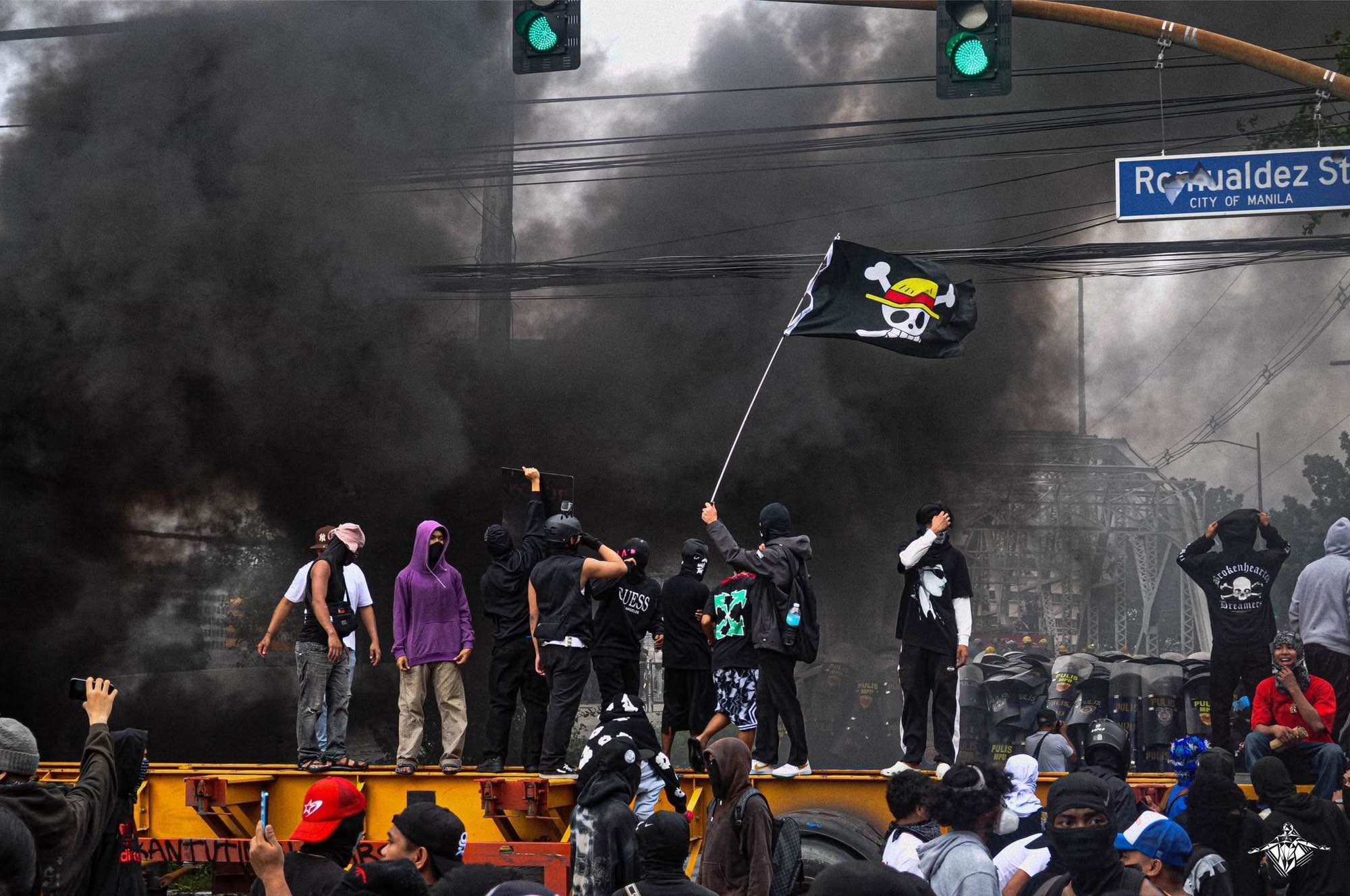
A year into the second Trump era, authoritarians are in control of the federal government, but they have yet to gain control of society at large. They have done tremendous harm, but their assault has hit a plateau, if not yet an impasse. They have to project strength at all times precisely because they are not invincible. It is finally possible to imagine how we might not only defeat them but take advantage of the situation to make profound changes.
Here, we revisit the structural forces behind Trump’s return to power, review the events of 2025, and propose a strategy for how to fight our way out of the Trump era together.
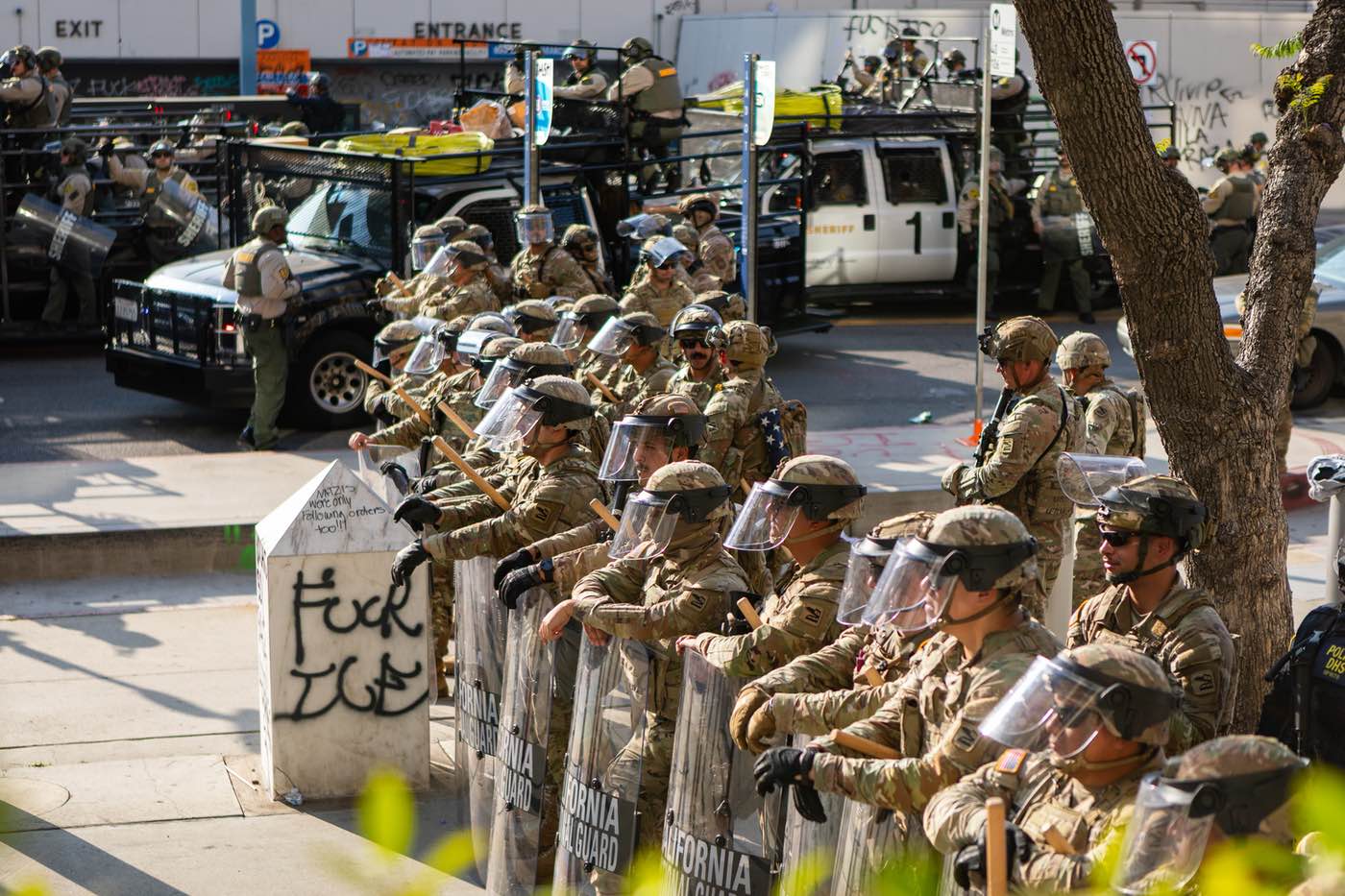
The more precarious a social order, the more violent force is required to preserve it.
A Rising Tide that Sinks All Boats
The political crisis in the United States today is the consequence of economic processes that have been underway for generations. The rise of fascism is not a fluke brought about by the demagoguery of a single individual, but the logical outcome of profit-driven capitalism.
The neoliberal order paved the way for this by deepening the gulf between the rich and poor, militarizing policing in order to preserve those disparities, and creating a downwardly mobile population desperate for scapegoats. In a globalized economy, politicians cannot mitigate the impact of capitalism on their constituents without investors taking their business elsewhere.1 Consequently, “left” parties have consistently failed to deliver on their promises, while reactionary parties have pulled public policy and permissible discourse steadily to the right—with centrists serving as a sort of ratchet preventing policy and discourse from shifting back.
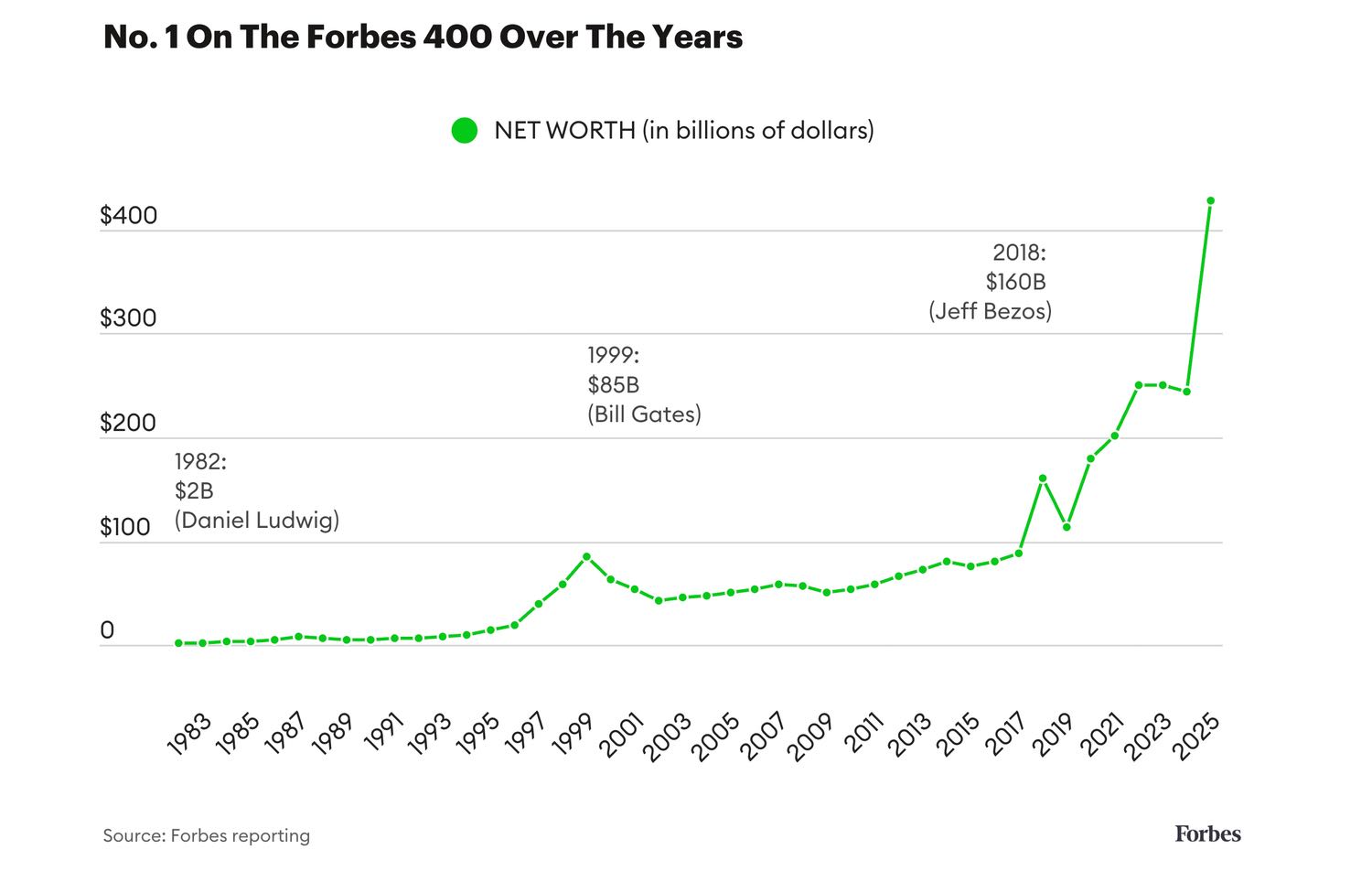
Underway for decades, wealth polarization has begun to produce qualitative shifts. In 2003, Bill Gates was considered the world’s wealthiest man with roughly $40 billion to his name; in October 2025, Elon Musk’s net worth reached $500 billion. Today, the world’s ten richest men control considerably more wealth than the poorest three billion people. When wealth becomes this unevenly distributed, the ruling class exerts so much power relative to the rest of the population that representative democracy changes character. A single man like Elon Musk can determine the outcome of an election by buying up communications platforms and bribing voters.
In such circumstances, it’s not surprising to see toadies like Curtis Yarvin arguing that billionaires should have formal political supremacy to match their economic supremacy. The desire for a politician who would “run the country like a business”—which is to say, like a dictatorship—has always been an autocratic fantasy. Having become accustomed to authoritarianism in the economic sphere, an increasing number of people are prepared to accept it in the political sphere as well. This creates a feedback loop: the more inequality there is, the more popular authoritarianism becomes, as people from every political faction conclude that, being too weak to assert their interests themselves, they need a powerful champion to do so on their behalf.
For over a century, democracy has functioned as the political counterpart to free-market capitalism. Both promise social mobility to individuals while preserving the inequalities fundamental to monarchy and feudalism, the systems that preceded them.2 For a while, democracy served to temper the violence of the economy and the state, at least towards the comparatively privileged. But as economic and political disparities deepen, neither capitalism nor democracy function to stabilize the social order any longer.
The economy has changed in other ways over the past half century. For example, today’s billionaires are increasingly accumulating their wealth through speculation. Whereas Henry Ford made his fortune by selling cars,3 Elon Musk assembled his mostly by benefitting from spikes in stock prices. Donald Trump and Musk are both hype men whose strategy is to ceaselessly scale up their promises, double or nothing, before anyone can evaluate the real outcome of their previous ventures. Like the cryptocurrency boom, this is a symptom of an era in which the rate of profit is declining, rendering speculation more profitable than old-fashioned commerce.
Capitalism is a fire that must continually consume resources in order to go on generating profits for the victors. Eventually, capitalists are compelled to treat the state itself as a site from which to extract profit rather than a means of stabilizing the terrain in which they compete. In an era of declining profits, capturing and pillaging the state becomes the ultimate gambit for hype men.
For decades, we heard about such things taking place in overseas autocracies—Russia, Belarus, Turkey, Hungary. Neoliberal pundits like Thomas Friedman and Francis Fukuyama believed that these were less advanced societies that would eventually catch up to the West as the free market civilized them. In fact, it was the European and North American democracies that were behind the times. Donald Trump and his henchmen studied the model that these authoritarian societies offered in order to import it to the United States.4
Again, this was not simply the initiative of a few malevolent individuals, but the consequence of structural developments. In the 1950s, the United States and the Soviet Union were able to subsidize social safety nets for their citizens in part thanks to outright resource extraction in the parts of the world that were on the receiving end of their imperialistic ventures. Following the collapse of the Soviet bloc, the world was divided into the wealthy consumer nations of the imperial core, where most citizens enjoyed the privileges of democracy, and the impoverished producer nations of the periphery, where the majority of people were treated as cheap labor and subjected to correspondingly repressive regimes. As economic disparities widen and life becomes more precarious in the imperial core, it should not be surprising that political liberties are eroding here, as well, while the forms of repression that were practiced overseas are brought home. Aimé Césaire termed the latter tendency the imperial boomerang.
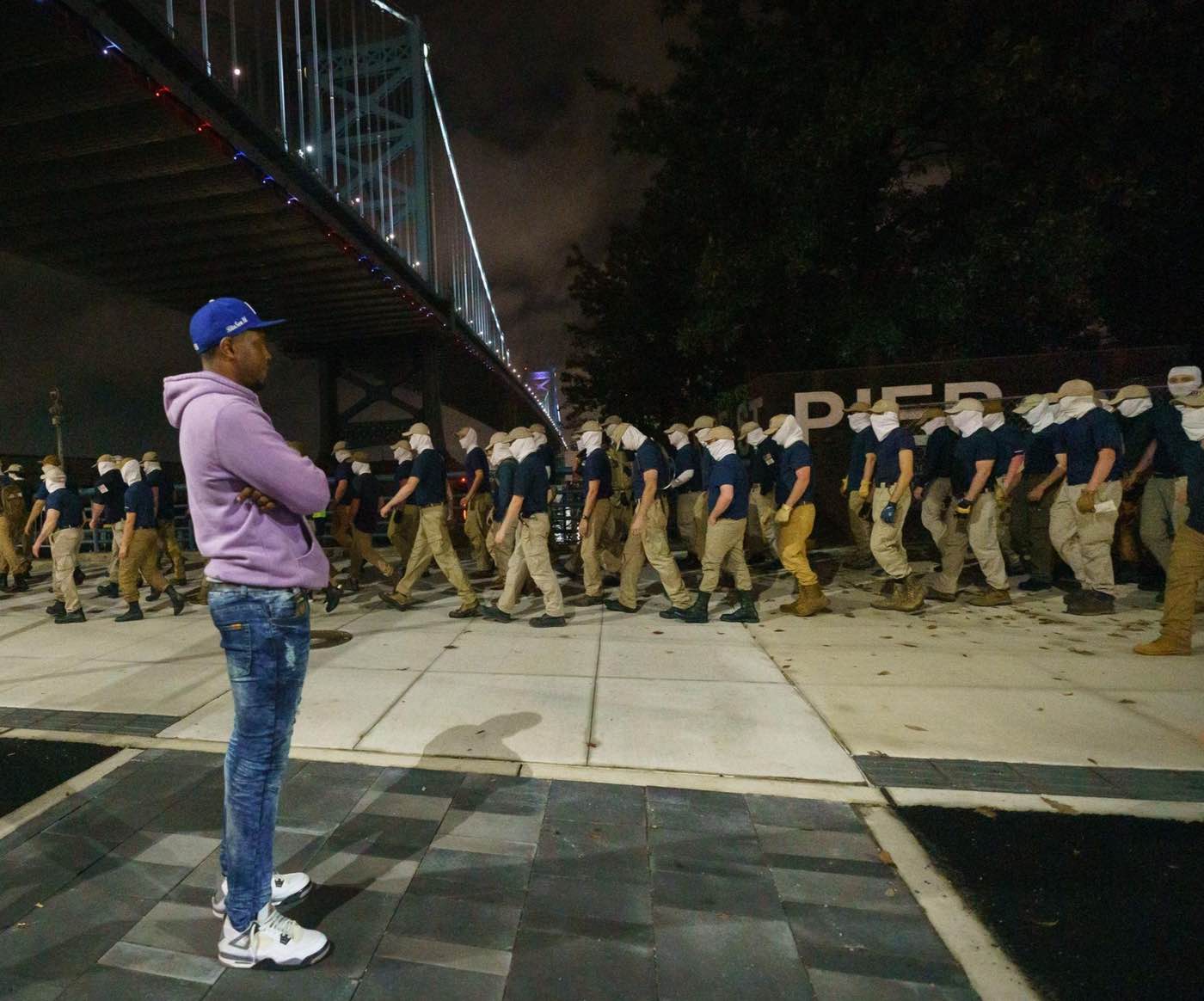
Fascists from the group Patriot Front marching in 2021. The rise of fascism is the logical outcome of the consequences of neoliberalism.
But the transition to cutthroat capitalism, scorched-earth policies, and rule by brute force entails risks for the ruling class, as we shall see.
Barring world revolution, the crises inflicted by capitalism will continue to provoke social unrest until the emergence of some massive new mechanism of control or appeasement.
In a globalized world, state structures are forced to impose and perpetuate these crises, but are increasingly powerless to mitigate the effects. This makes the state a sort of hot potato; any party holds the reins at its own risk, as Morsi’s downfall showed in Egypt. On the other hand, in moments of crisis, whoever is capable of effective action against the repressive forces of the state will accumulate popular credibility.
–The Ukrainian Revolution and the Future of Social Movements

A throne after the looting of the president’s residence in Almaty during the uprising in Kazakhstan in January 2022.
Trump 2.0
Those who followed the rise of autocracy in Russia know what to expect when it takes hold. Everything looks more or less the same—the police go on policing, landlords go on collecting rent, people go on showing up to work. The transition takes place so smoothly because all the necessary elements of fascism were already present under democracy. Nonetheless, there are telltale signs. You see militarized state mercenaries in the streets more and more often, masked and heavily armed. Protest becomes progressively more difficult and dangerous, until the last protesters are arrested for standing alone holding blank pieces of paper. And sooner or later, once the security agencies have the internal situation under control, the regime goes to war—for fascism must always have an enemy to mobilize against.
The second Trump administration represents an experiment in authoritarianism that has not occurred in the United States in living memory. This time around, Trump has control of practically the entire executive branch and the Supreme Court, as well as the backing of Silicon Valley. Yes, the United States was already built on white supremacy, patriarchy, and colonial violence—but those who do not want to update their analyses to reflect the new situation are simply in denial.
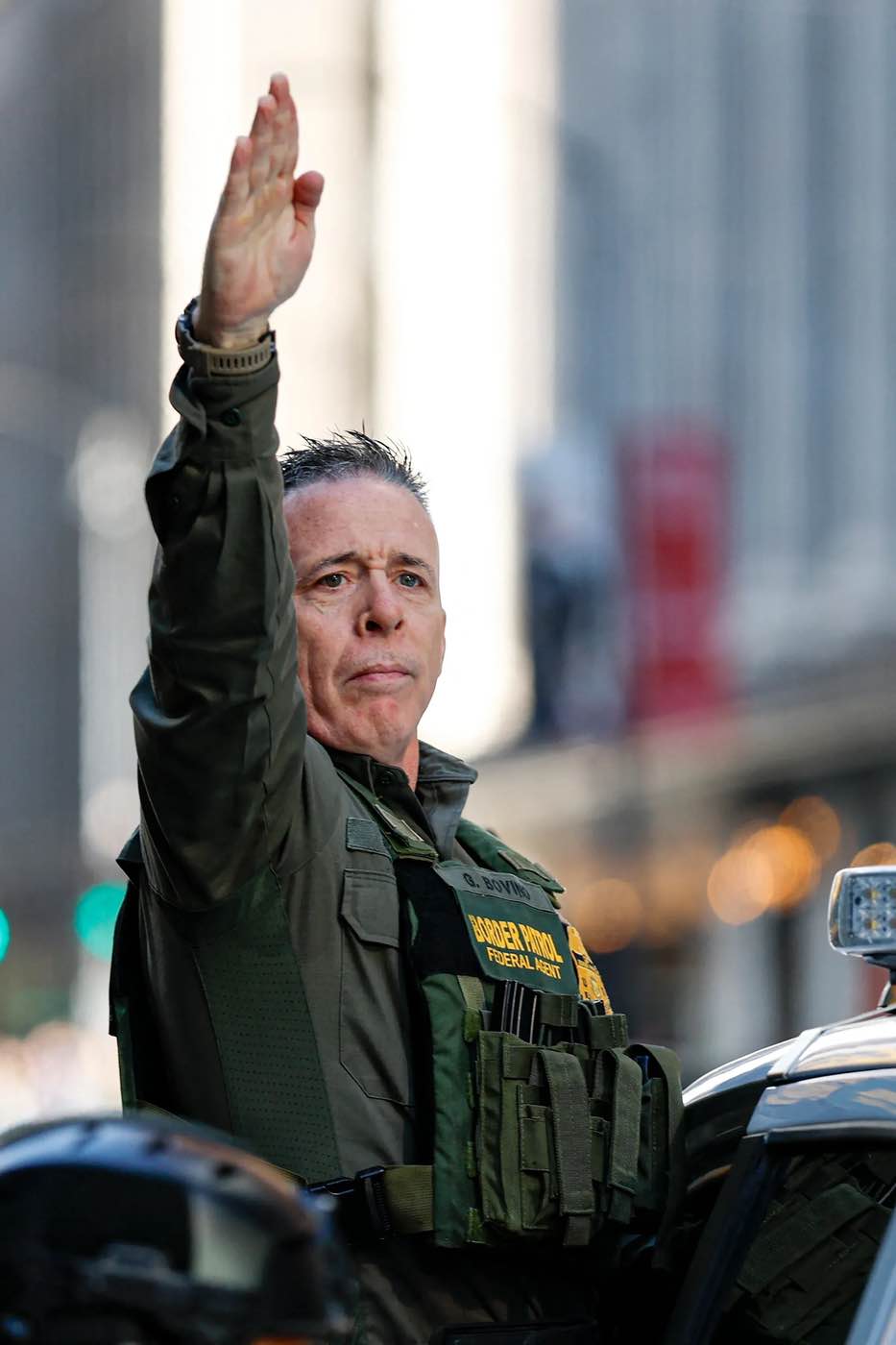
Gregory Bovino, dubbed Border Patrol “Commander at Large” (a rank with no statutory basis) by Homeland Security Secretary Kristi Noem, oversaw ICE raids in Los Angeles, Chicago, Charlotte, and New Orleans through the latter half of 2025. The transition from democracy to autocracy involves the emergence of new militarized groups that operate outside the old protocol.
For the purposes of this analysis, we won’t linger on the strategic frameworks and objectives driving different elements of the Trump coalition—the Heritage Foundation’s “Unitary Executive Theory” intended to concentrate dictatorial power in Trump’s hands, the Christian nationalists’ Seven Mountain Mandate aimed at gaining control over society at large, the counterinsurgency strategy refined in Iraq and Afghanistan that the military and police bring to bear upon protest movements and unruly communities in the US, the Christian and Jewish Zionists’ efforts to use Palestine as a testing ground to establish genocide as a means of gentrification, the Silicon Valley corporations and petroleum companies and cryptocurrency profiteers all seeking license to pillage with impunity.
We will confine ourselves to identifying some of the regime’s initial objectives:
- Purge the federal bureaucracy and military of all officials not solely loyal to Donald Trump
- Purge the federal bureaucracy and military of trans people, Black women, and other suspect demographics
- Suppress all programs promoting diversity and egalitarianism
- Consolidate power in the executive branch, both legally and in practice
- Concentrate resources in the federal agencies proven to be most loyal to Trump, such as Immigration and Customs Enforcement (ICE)
- Weaken and overwhelm the judiciary while using the Supreme Court to remove legal obstacles
- Weaponize the Justice Department to use litigation to target adversaries
- Subordinate or sideline the legislature
- Abolish or defund all government-sponsored agencies not directly under Republican control
- Subordinate universities and the field of education as a whole via lawsuits, withholding funding, and policies suppressing dissident perspectives
- Suppress hostile media platforms via lawsuits, buyouts, and intimidation
- Suppress, defund, or discredit all institutions that could collect or circulate unfavorable information, including medical research, weather forecasting, economic and environmental statistics, and data about climate change and food access
- Enable administration leadership to cash in on political power via stock trading, cryptocurrencies, and other business schemes and to extract wealth through state-business alignment
- Shift United States foreign policy towards transactional relationships chiefly benefitting administration leadership
- Geopolitically realign the United States with autocracies, supporting extreme-right and fascist parties worldwide
- Center white supremacy in foreign policy—for example, by curtailing refugee status except for white Afrikaners from South Africa
- Appropriate the discourse of fighting antisemitism to serve a Christian Nationalist agenda
- Gerrymander voting districts to ensure one-party rule
- Compel intra-party loyalty via intimidation, control of funds, and the threat of facing loyalists in primary elections
- Normalize both corruption and presidential pardons, using these in tandem to subordinate politicians of all parties as well as other powerful figures
- Normalize military operations against civilian targets inside as well as outside the United States; establish military forces specifically focused on crushing civil unrest
- Redirect the Department of Homeland Security, the Federal Bureau of Investigations, and other federal intelligence agencies to focus chiefly on targeting domestic dissent
- Diminish quality of life in areas considered hostile to the administration via economic disruption and targeted policing operations
- Disrupt funding streams to political adversaries, including non-profit organizations
- “Flood the zone”: dumbfound and distract adversaries by continuously pushing the envelope, for example by threatening to annex Greenland and Canada
- Instill fear in targeted communities and political adversaries
When the Nazis took control of Germany, their program of Gleichschaltung—an electrical metaphor for consolidation—swiftly did away with all other political parties and organizations. The Trump administration knew that if they attempted to accomplish something similar, they would provoke a backlash that they could not control. The above program represents the most they believed that they could get away with.
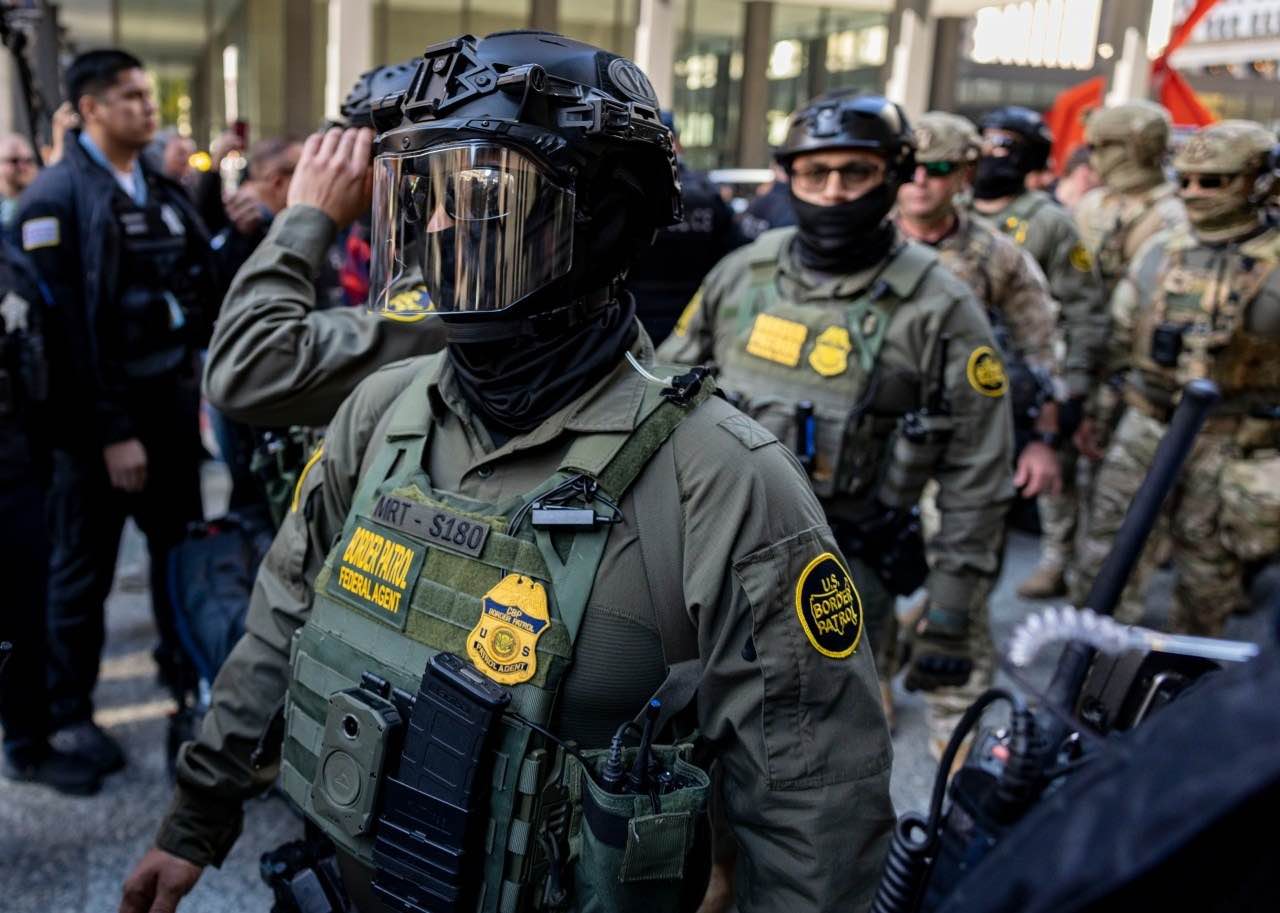
Concentrating resources in the hands of ICE is both a means of forcibly changing population demographics and a way of establishing mercenary violence as a profitable industry within a society in which most people face diminishing prospects.
At the close of 2025, the administration has fulfilled the majority of these objectives. Do they still have enough momentum to advance to the next stage of their operation?
The Curtain Rises
The first Trump administration opened with thousands of demonstrators taking the streets of Washington, DC in defiance, setting the precedent for four years of fierce resistance that ultimately resulted in Trump’s departure from office. The second Trump administration opened with Proud Boys marching in the streets of DC where the anarchist black bloc had marched on January 20, 2017. It was the Proud Boys’ first appearance in the capitol since the failed coup attempt of January 6, 2021, for which Trump had just issued blanket pardons.
Where were the anarchists and other protesters on January 20, 2025? At the opening of Trump’s second term, many people were paralyzed by the idea that any sort of resistance would only play into his hands. Ahead of the tame protests that the group 50501 organized for February 5, some panicky liberals speculated that it was a setup to declare martial law:
“Project 2025 outlines specific plans to use any mass protests as an excuse to deploy the military for domestic law enforcement, up to and including deploying deadly force.”
Today, it’s easy to forget how many radicals bought into some version of that narrative. Trump and his supporters appeared to be an unstoppable force, something out of a nightmare. Hadn’t we already spent four years risking everything to defeat them, only to see them rise from the dead even stronger? As they took over the state apparatus with every other political faction in disarray, the terror that they inspired was their chief asset. Fascism depends on the management of perceptions.
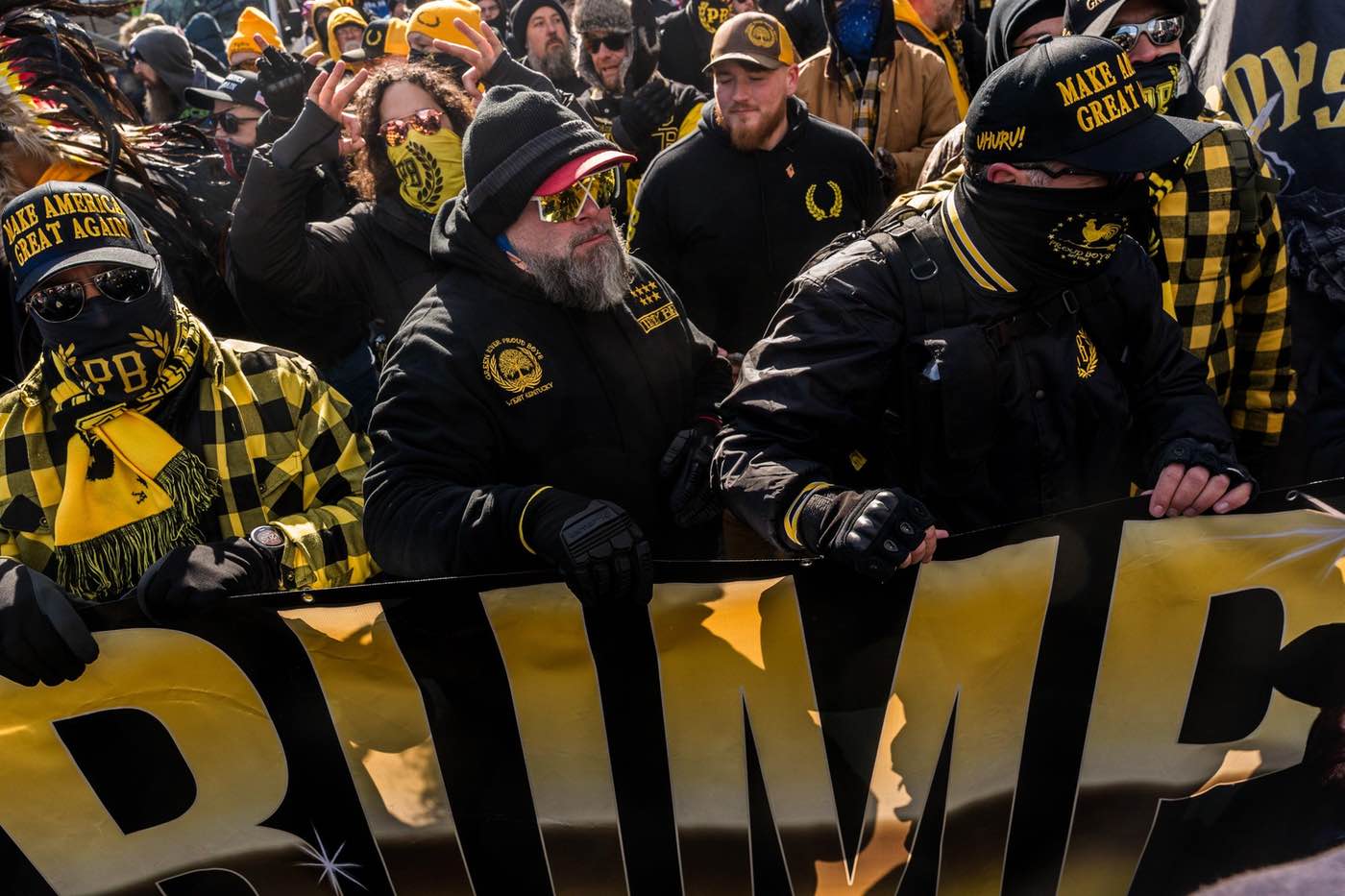
Proud Boys and other fascists returned to the streets of Washington, DC on January 20, 2025.
No More Concessions
State capture is a type of systematic corruption whereby narrow interest groups take control of the institutions and processes through which public policy is made, directing public policy away from the public interest and instead shaping it to serve their own interests. [Joel S.] Hellman et al. introduced the concept in the 1990s to describe patterns of behavior observed during the first decade of transition in parts of the former Soviet Union (FSU) and Eastern Europe… The captors of the state were businesspeople, soon to be known as “oligarchs,” who purchased influence over policy formation through direct kickbacks or promises of favors, using personal connections to the individuals and parties holding political power. This framing of business as the captors of politics probably always overstated the separation between the two spheres.
-Elizabeth Dávid-Barrett, State Capture and Development: A Conceptual Framework
Elon Musk and his underlings immediately set about dismantling every part of the government that did not help them accumulate wealth or keep the citizenry in line. The cuts they made have already resulted in hundreds of thousands of deaths without significantly reducing the federal budget. “Government efficiency” was beside the point: they were showing that a new era had arrived in which the state would represent new values.
Anarchists that we are, we cannot help pointing out that if all these programs had been maintained by autonomous grassroots projects, it would have been impossible for a Sieg-Heiling fascist and his juvenile henchmen to dismantle them in a matter of months. Panning back to a longer timeframe, we can understand “state capture” both as the process by which the institutions of the state supplant grassroots initiatives, rendering the public increasingly dependent upon the state, and the second phase of the process, during which oligarchs gain control of the state who see no utility in ensuring that it is perceived to function as a neutral arbiter or to play any broadly beneficial role whatsoever.
But it is important to remember that the state actors who integrated those initiatives into the state in the first place—not just aid programs and social security, but also representative democracy itself—understood themselves to be making repressive concessions, concessions that were necessary to subdue social unrest. Musk and his colleagues are wagering that the technologies of repression—or else apathy and despair—have progressed so far that these concessions are no longer necessary.
They are gambling that hard power is worth more than soft power. They would prefer that people live in terror of being murdered in a random naval strike than that people support US foreign policy. To cite a recent example, Trump is assuming that the advantages he gains by pardoning Juan Orlando Hernández, the corrupt former president of Honduras who made millions of dollars flooding the United States with cocaine, are worth more than the credibility that he gives up by doing so in the midst of an apparent military campaign against narco-trafficking.
In brazenly destroying every feature of the government that could preserve its perceived legitimacy in the eyes of a great part of the general public, they are taking a risk, perhaps a bigger risk than they understand.
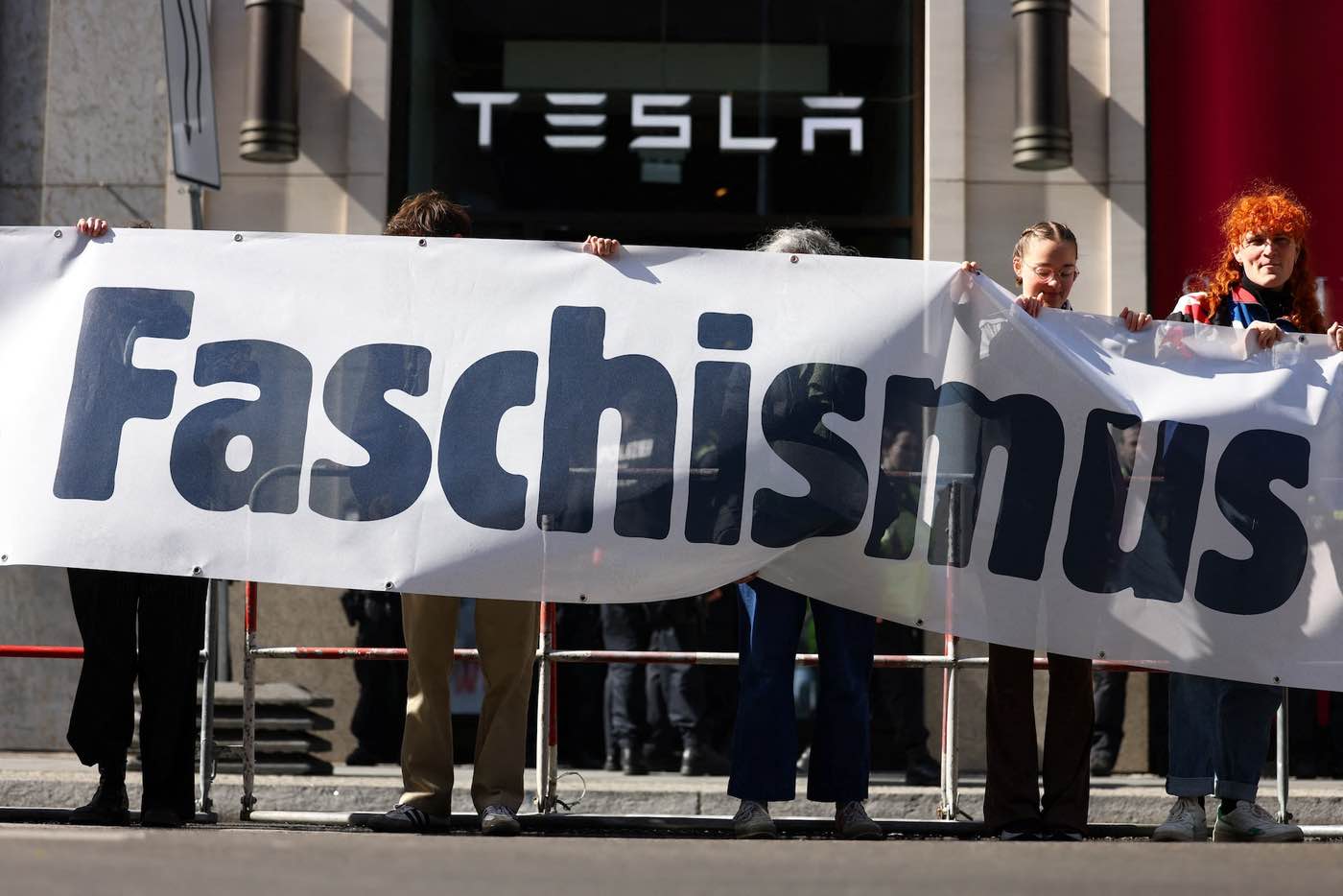
Demonstrators in Berlin. While Germans are famously hesitant to acknowledge fascism outside their borders (“It’s only fascism if it’s from the fascism region of Germany, otherwise it’s just authoritarianism”), Elon Musk convinced them that he was the real thing.
Less Bread, More Circuses
The poet Juvenal wrote that the people of ancient Rome were bribed with bread and circuses to accept the end of democracy and the establishment of the dictatorship known as the Roman Empire. The tried-and-true playbook to accustom people to autocracy is to meet their material needs while channeling their attention towards activities that substitute for self-determination.
Donald Trump is trying to accomplish something more unusual: he aims to preside over the destruction of the last vestiges of the social safety net and the impoverishment of much of what remains of the middle class while buying off his support base with entertainment alone. His administration has not bolstered the economy but further destabilized it, as if intentionally rendering people more precarious, desperate, and exploitable. In return for this, we are supposed to content ourselves with watching the violent reality television gameshow of his presidency. Less bread, more circuses.
Whatever far-right propaganda outlets claim, tariffs and crackdowns on immigrants will not improve the economic prospects of white US citizens. Already, an impoverished US working class was only kept appeased by the cheap consumer goods produced overseas by underpaid labor; it would only be possible to move those production operations to the US if desperate American workers were compelled to work for even lower wages than they do today. Likewise, deporting those who have been forced to work the lowest-paying jobs on the market will only make goods and services more expensive for everyone else.
The real reason for the tariffs and the deportations is that they are mechanisms of autocracy: they offer ways to maximize the leverage that Donald Trump can exert on governments, corporations, and ordinary people from the Oval Office. The tariffs enable him to negotiate quid pro quo agreements with governments and corporations for his own benefit, the deportations to build up a loyal paramilitary force tasked with attacking whomever he deems an internal enemy. Trump has been using antitrust mechanisms in the same way, along with the so-called Department of Justice and litigation in general. Likewise, cutting off funds to healthcare and education will not strengthen the United States as a political or economic force; it is solely intended to concentrate more power in Trump’s hands while leaving ordinary people occupied with the challenges of bare survival.

Above all, the goal is to accustom the general population to suffering—both to others’ suffering and to their own. This is the point of the extrajudicial killings in the Caribbean Sea and eastern Pacific Ocean, of the gratuitously brutal arrests of Mahmoud Khalil and other green card holders, of Trump’s efforts to weaponize the legal system. This explains why they commit their worst atrocities not in secret, but as media stunts.
Again, rather than seeing this simply as the audacity of a few malevolent individuals, we should understand it as a response to structural factors. Previous generations of autocrats took care to channel resources towards the bread side of the bread and circuses formula. If today’s autocrats do not, it is not because they are foolhardy, but because they are constrained by contemporary conditions. We should seek out the consequent fault lines and vulnerabilities.
Round One
By the opening of the second Trump era, the powerful grassroots movements that had clashed in 2020 had been tamped down on both sides. State repression likely played a role in this—the response to the coup attempt of January 6, 2021, the judicial persecution of the Stop Cop City movement—but nonetheless, the subsiding of these movements is one of the enigmas of our time. Had the entire population of the United States simply been reduced to digital spectatorship and isolation?
Many people expected that Trump’s pardons would bring the Proud Boys and right-wing militias back in full force. It may be that many of those who would have joined them instead sought to join ICE, or else waited on the institutions of the state to follow through on Trump’s promises. But what became of the millions who had participated in the George Floyd uprising?
The first unruly protests involving highway blockades and student walkouts took place in Los Angeles at the beginning of February. The first demonstrations at Tesla dealerships followed later that month. Through the spring, older middle-class liberals were arguably the demographic most represented in protest activity. This illustrates the extent to which Trump’s return to power was facilitated by widespread disenchantment and disaffection. Practically every other segment of society had already been reduced to cynicism. Comfortable liberals were the only ones who still had something to lose—the idea that they lived in a democracy.5
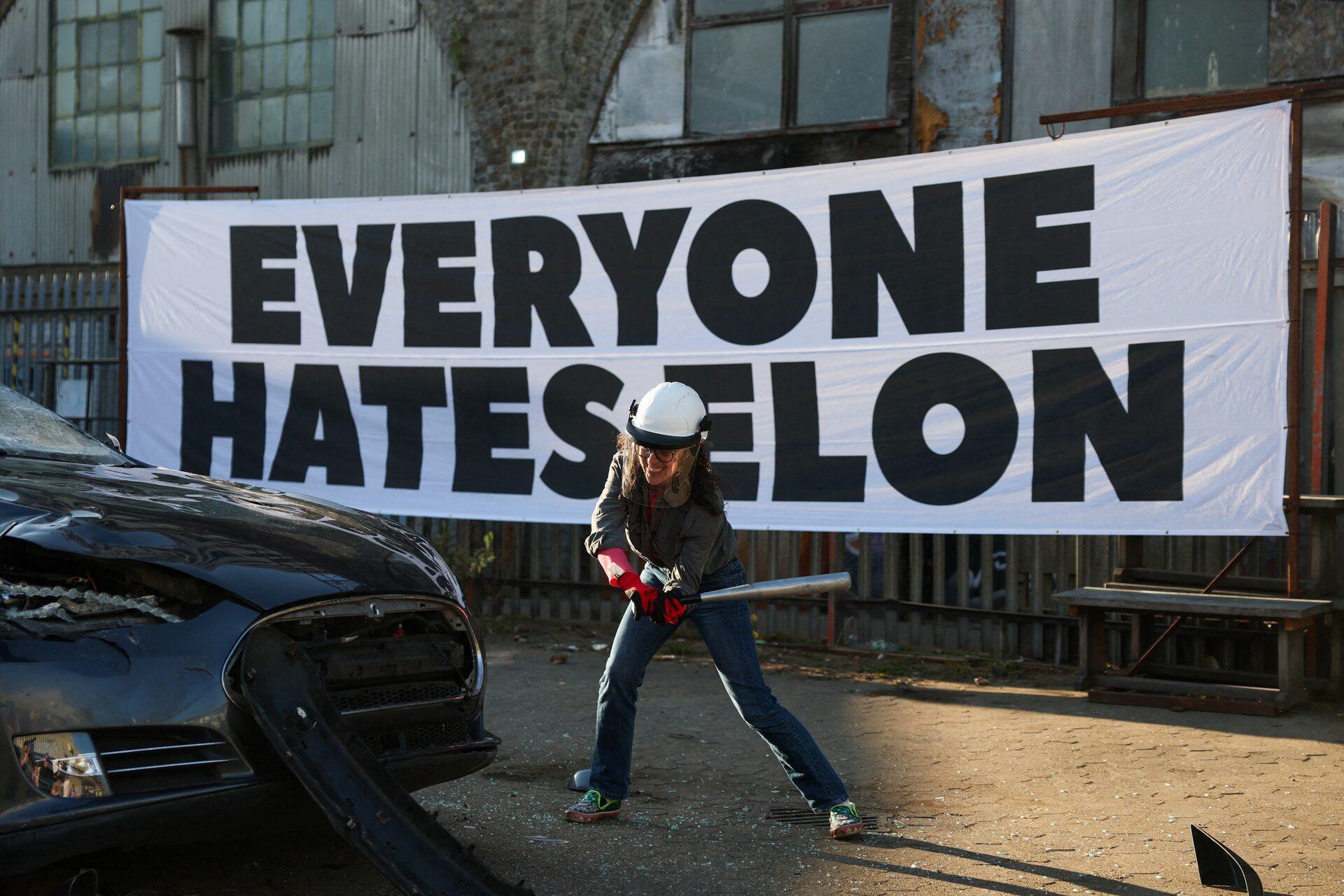
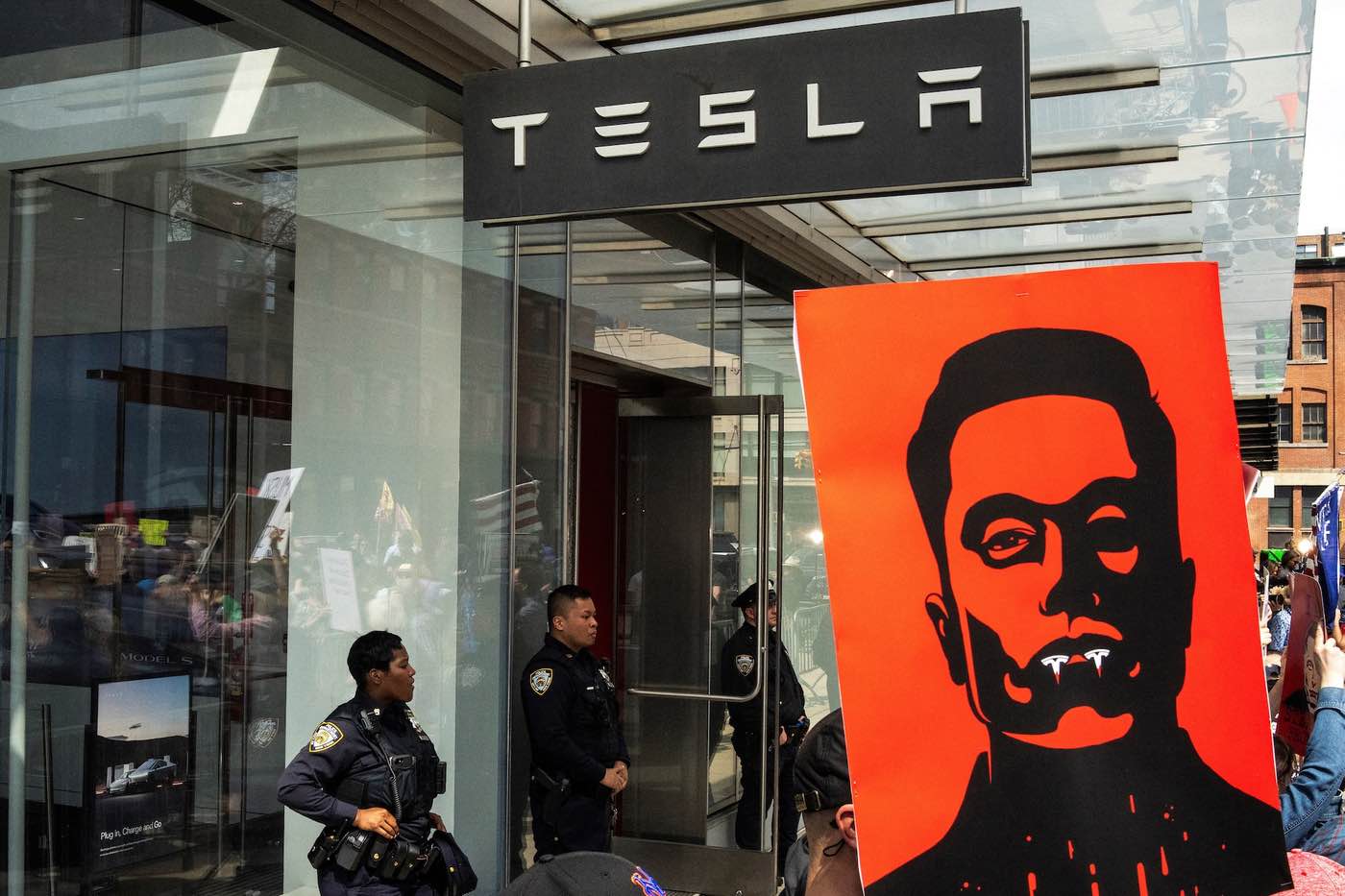
However tame the participants, the Tesla protests had an impact. Weekly protests at Tesla outlets across the country supplemented by vandalism and arson contributed to a steady decline in overvalued Tesla stock; on March 10, it plunged 15%. The next day, Trump staged a Tesla commercial at the White House in return for another $100 million from Musk. Tesla stock rebounded, but the stunt showed that the protests were taking effect. It may also have put additional strain on their relationship.
One of the first signs that the Trump machine was not unstoppable came on April 1, when Elon Musk’s preferred candidate for the Wisconsin Supreme Court lost the election, despite Musk pouring over $25 million into the campaign. The next day, Trump announced his tariffs, a clumsy effort to reset US trade polices to the year 1930—likely not what transnational capitalists like Elon Musk had had in mind when they backed him. The Tesla protests had not subsided. On April 22, Musk told anxious Tesla investors that he would shift his attention away from Washington, DC.
On May 27, the same day that San Diego locals clashed with Immigration and Customs Enforcement agents in one of the first publicized instances of resistance, Musk criticized Trump’s “Big Beautiful Bill.” Trump hosted a sendoff for Musk on May 30, the last day the two were able to maintain the appearance of being on good terms.
On June 3, locals in Minneapolis drove ICE out of a neighborhood. The next day, people confronted ICE agents as they carried out raids in Chicago and Grand Rapids.
On June 5, the feud between Elon Musk and Donald Trump exploded into the public, with Musk announcing that Trump was in the Epstein files and suggesting that Trump should be impeached a third time.
Early in the second Trump administration, some had speculated that capitalists like Elon Musk were the true powers behind the throne and would prove more powerful than Trump. Yet looking at the example of Russia, we see that Vladimir Putin successfully used the instruments of the state to crush every rival, however wealthy. Thus far, Musk has played a far weaker hand than Trump. So long as the state determines the conditions that prevail in the market and retains a monopoly on violent force, control of the state is the currency of power that trumps all others.
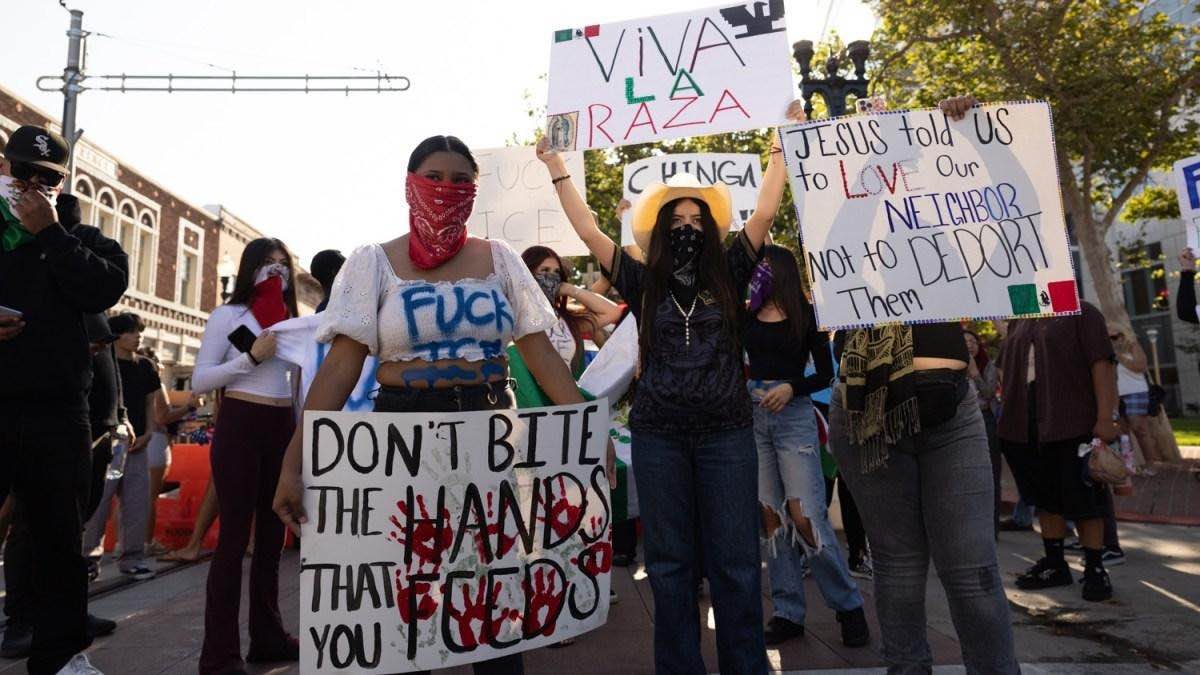
The very next day—Friday, June 6—people in Los Angeles responded to an ICE raid, precipitating days of fierce unrest. Trump deployed National Guard to LA, fulfilling the fears of those who had claimed that violent protest was exactly what he wanted. However, the protests did not die down when the National Guard arrived in Los Angeles. On the contrary, they continued, inspiring solidarity demonstrations around the country, the first wave of confrontational demonstrations since Trump had taken office.
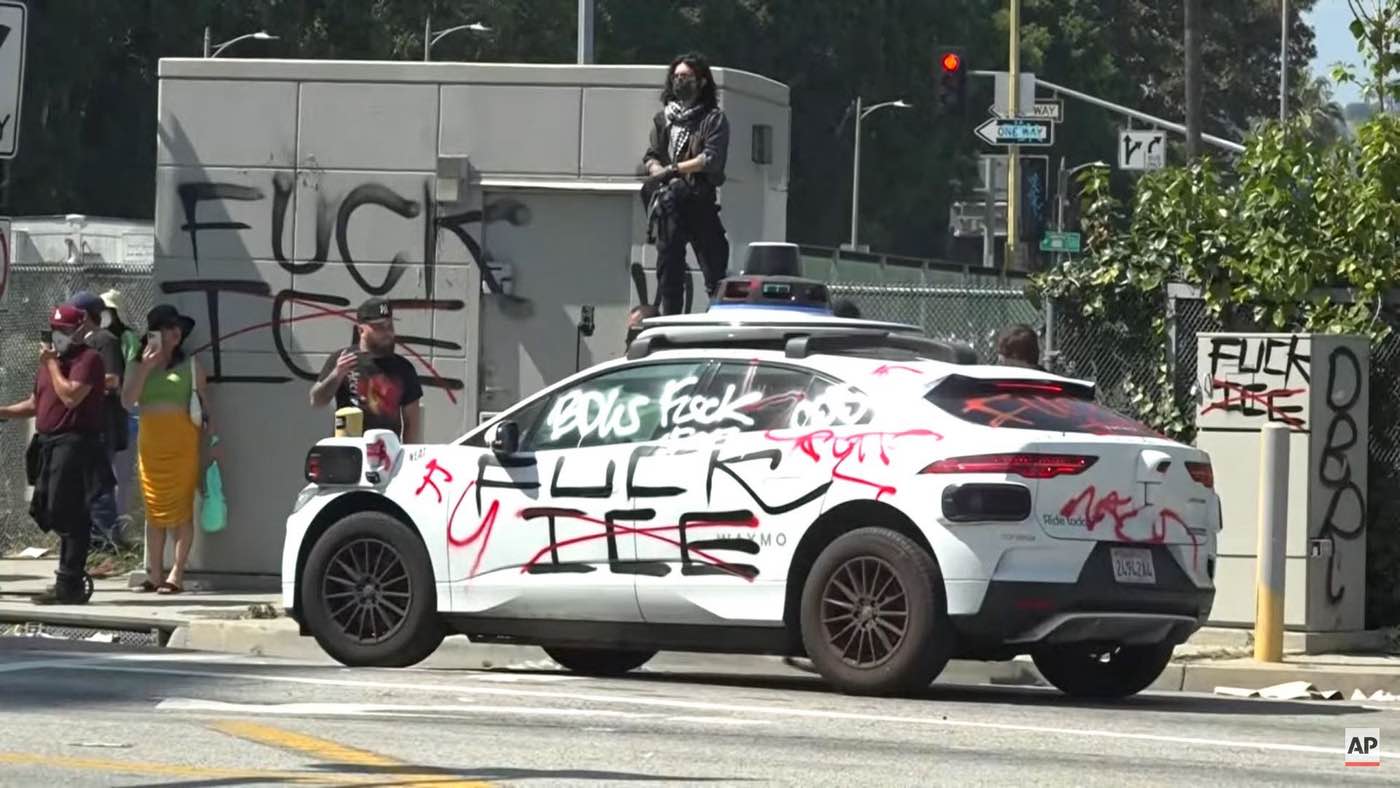
Demonstrators in Los Angeles, June 2025.
The No Kings protests were scheduled for June 14, the day that Trump had arranged a military parade in Washington, DC for his birthday. With the National Guard on the streets, some feared that the day would herald the beginning of military rule.
June 14 began with a Trump supporter shooting multiple Democratic politicians in Minnesota. Nonetheless, over five million people turned out to demonstrations in thousands of different locations. As in August 2014 and May 2020, militant confrontation preceded mass protest: rather than frightening people away, it drew out more people, driving home the urgency of the situation and wresting the news cycle from Trump’s control. By contrast, only a few thousand spectators attended Trump’s military parade.
In the history of the second Trump administration, the first chapter concludes with the protests of June 14. Until that day, it wasn’t clear how much popular support there was for resistance, nor how little enthusiasm there was for Trump’s desire to turn the military against the public, nor what would happen if people took the streets.
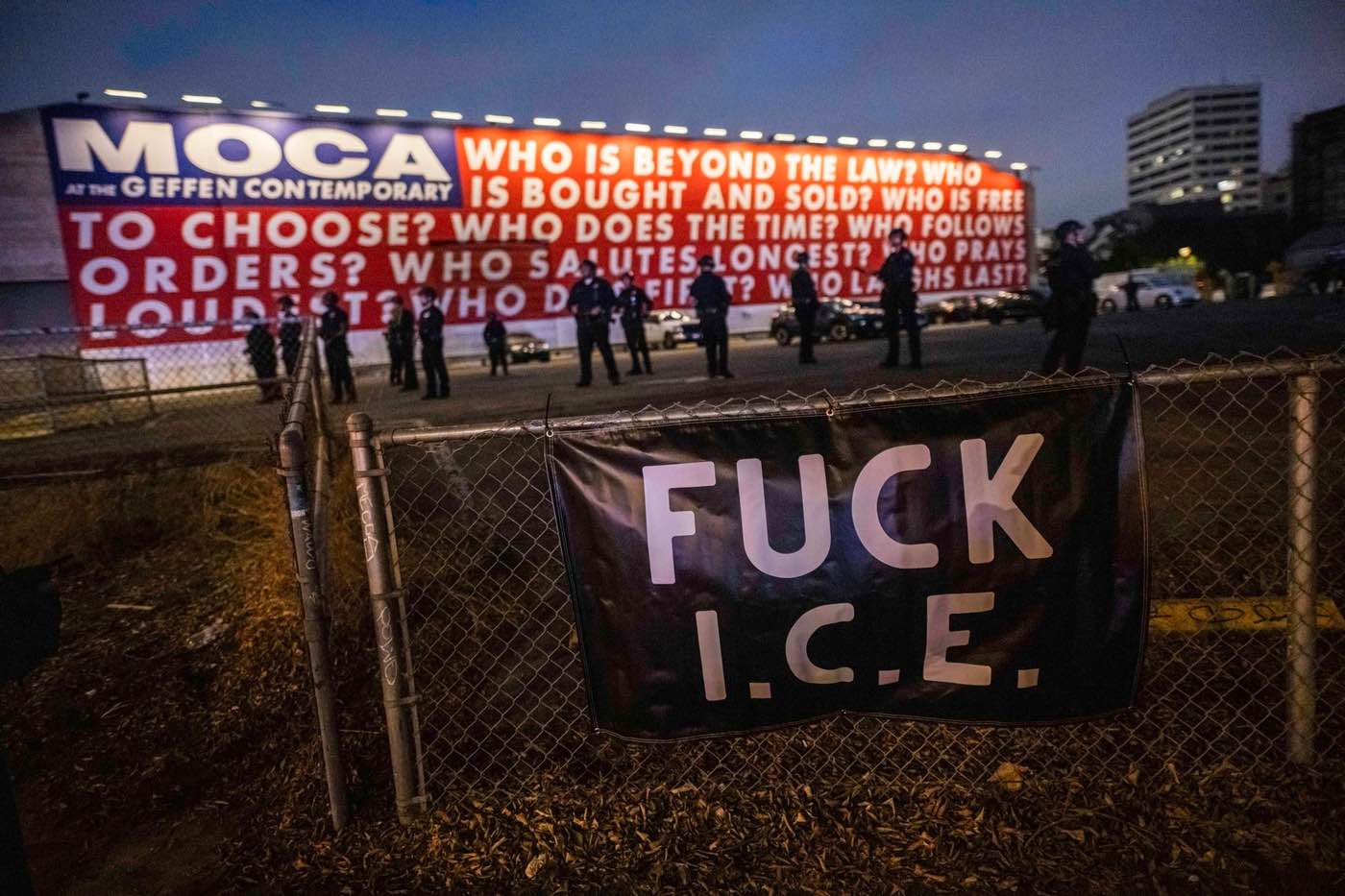
Round Two: Reichstag Fires
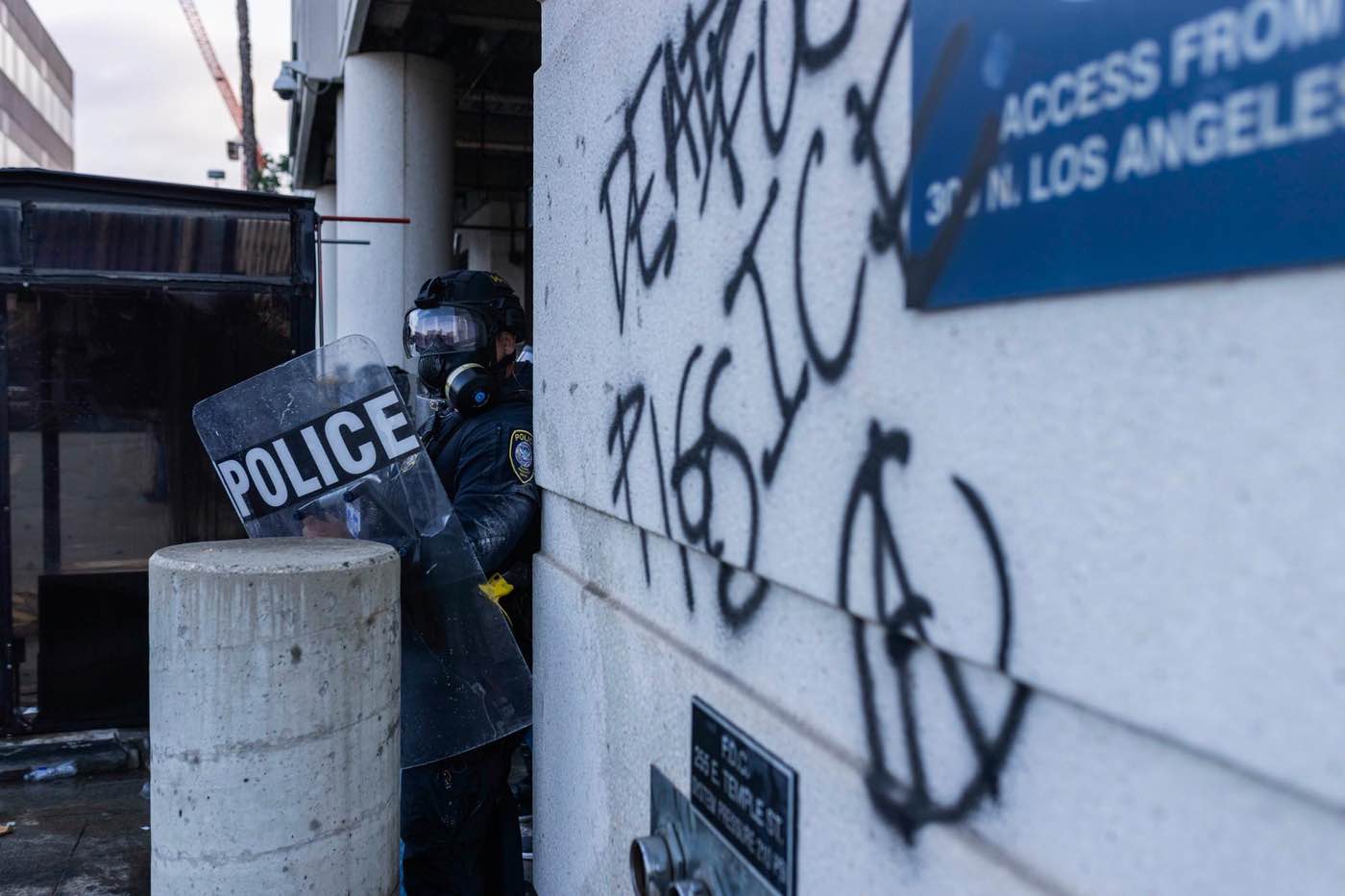
Of course, ICE did not leave Los Angeles. A protracted war of attrition followed, in which ICE mercenaries recycled tactics that neo-Nazis had previously employed for street demonstrations. At the same time, local organizers developed a playbook to track their movements, force them out of hotels, and equip rapid response networks to resist them.
On July 4, a shooting took place during a demonstration at the Prairieland Detention Center south of Fort Worth, Texas. The police ultimately arrested 18 people, charging them with an array of crimes including “transporting antifa materials.” The Trump administration hailed this as the first legal case against “Antifa,” aiming to set a precedent for criminalizing protest in general. The case is ongoing.
At the beginning of August, a teenager who had worked alongside Elon Musk to dismantle the US Agency for International Development claimed that he had been assaulted in downtown Washington, DC. Musk had originally hired him to work at Neuralink; barely out of high school, by August, this boy had already worked inside the State Department, the Department of Homeland Security, the Cybersecurity and Infrastructure Security Agency, the Federal Emergency Management Agency, the Transportation Security Administration, and the Social Security Administration. This résumé speaks volumes about what kind of expertise—and security—can be found in federal agencies under Donald Trump.
Trump used this opportunity to deploy the National Guard to Washington, DC. Yet the presence of Guardsmen in DC did not suppress expressions of dissent. If anything, it had a demystifying effect, showing that putting the military on the streets could not serve to consolidate control while spurring grand juries to openly defy prosecutors.

ICE mercenaries recycling tactics that they had previously used for neo-Nazi street demonstrations.
On September 10, racist propagandist Charlie Kirk was shot while promoting Trump’s agenda at a university in Utah. Although the young man who killed Kirk had himself grown up in a conversative family, Trump and his supporters jumped at the chance to call for a crackdown on “the left,” with one Trump supporter declaring without irony that the shooting of Charlie Kirk was “the American Reichstag fire.” For the first time since Trump entered office, grassroots fascist groups around the country held public demonstrations.6
Centrists provided cover for Trump and his supporters by joining the chorus of Republicans who treated Kirk’s death as a more significant tragedy than the tens of thousands of fatalities caused by gun violence in the US every year, including the Democratic politicians assassinated three months earlier. Whether they were motivated by fear or genuine concern for human life—dubious in view of their silence about the genocide in Gaza—the consequence was to give the Trump administration and its supporters a free hand.
Trump and his henchmen are hastening into fascism as fast as they can. They have already scripted the scenes in advance. There is no such thing as “giving them an excuse” to crack down—they are determined to make use of whatever opportunities arise, however far-fetched. The important question is whether others will enable them to do so. The burning of the Reichstag in February 1933 enabled the Nazis to consolidate power in Germany only because other political factions responded to it by granting the Nazis emergency powers. The way to stop a Reichstag fire is not to attempt to control those who act in response to the violence of the state, but rather to refuse to legitimize fascist initiatives or narratives under any circumstances. Anything else is complicity, pure and simple.
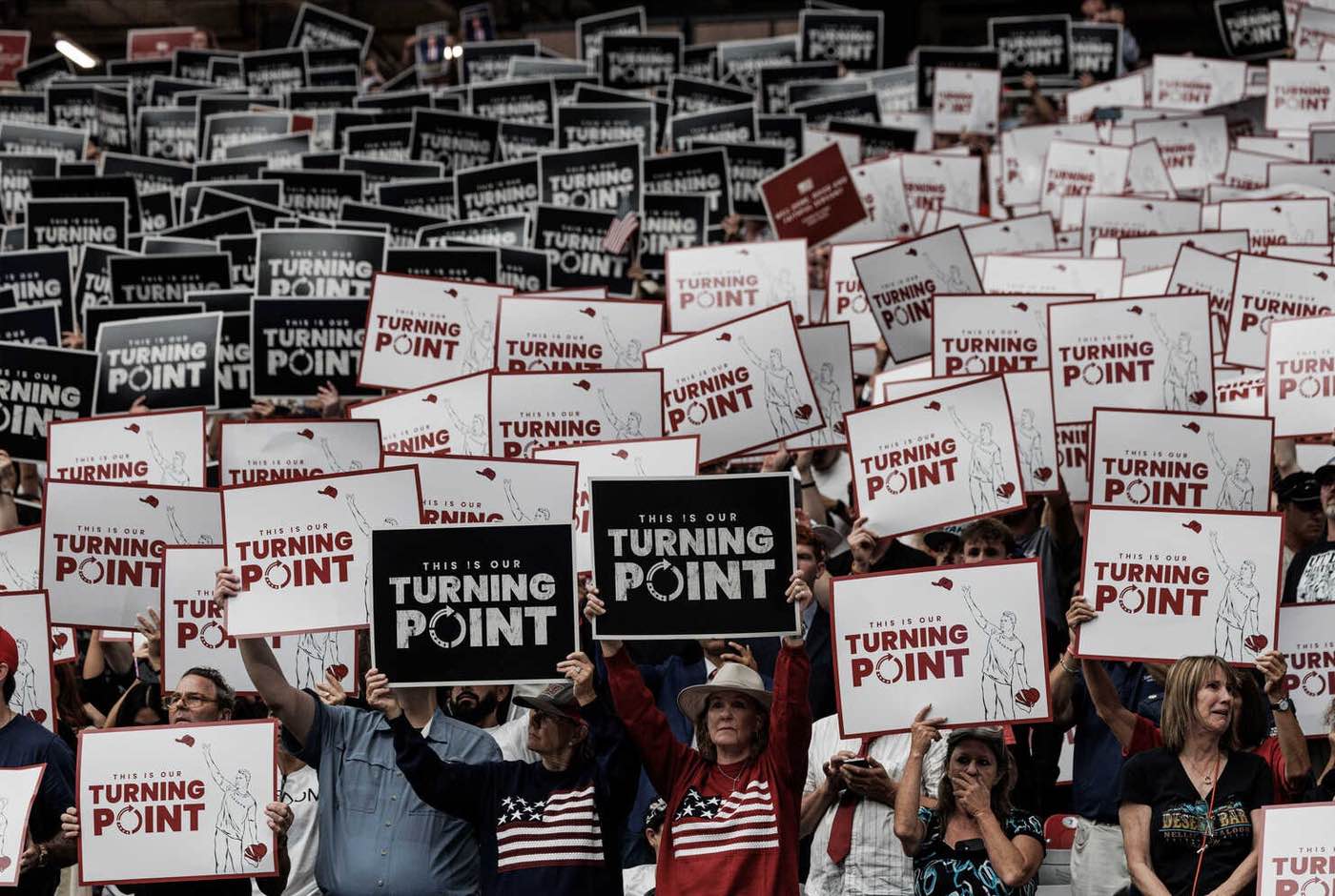
Charlie Kirk, meet Horst Wessel.
On September 17, Trump announced that he was designating “Antifa” as “a major terrorist organization.” Satisfied with the progress of the initial phase of their program—“First, they came for the immigrants”—the Trump administration was moving on to the next stage: “Then they came for the anti-fascists.” A government doesn’t announce that it has embraced fascism; it simply declares anti-fascists to be enemies of the state.
On September 21, nearly 100,000 people packed into a stadium in Arizona for a Trump rally billed as a memorial service for Charlie Kirk. Stephen Miller’s speech channeled Nazi propagandist Joseph Goebbels. Trump and Musk were seen together for the first time since May. Presenting themselves as victims enabled Trump and his supporters to regain momentum after the reversals of June. Fascists must appear to be both Übermensch and underdog; this propulsive contradiction lies at the core of their project.
National Guardsmen were still occupying the streets of Los Angeles and Washington, DC. Trump had announced that he would deploy the National Guard to Chicago, where a massive ICE operation was underway, and to Portland, Oregon as well. On September 30, he convened US military officials from around the world to instruct them to use American cities as “training grounds.”

“We’re under invasion from within,” Trump declared to a gathering of US military leadership on September 30. “No different than a foreign enemy.”
On October 8, Trump hosted a panel of far-right grifters whose business model was to spread fear and lies about anti-fascists. One guest, Jack Posobiec, explicitly stated to the approval of Trump and his cronies that “Antifa” originated in the Weimar Republic—making it clear for all to see that the administration considered those who resisted the rise of Adolf Hitler to be its foes.
It was a frightening moment to be an opponent of fascism. Hundreds of people had lost their jobs for not responding to Charlie Kirk’s death to the satisfaction of their employers; the Turning Point organization was targeting one professor after another for suspension. Mark Bray, author of Antifa: The Anti-Fascist Handbook, fled the country. The anti-fascist media platform It’s Going Down shut down.
In such a situation, it is tempting to withdraw from proactive efforts to focus on preparing for repression—but doing so cedes the initiative to the authorities, permitting them to continue to gain momentum.
The Trump administration was preparing the next phase of its assault. How far would it go, and how fast?

An ICE agent in Chicago points a weapon directly at a photographer. Fall 2025.
The Tide Turns
Ahead of the October 18 reprise of the No Kings protests, Trump and his underlings described the participants as “Hamas supporters,” “antifa,” and “paid protesters” representing “the terrorist wing” of the Democratic Party, a “small but very violent and vocal group.” This apparently did not deter anyone from participating. Exceeding expectations, nearly seven million people turned out for the October protests, considerably more than in June. While the demonstrations themselves were mostly staid events controlled by local Democrats, they drew out a wide range of people, some of whom were eager to engage in more concrete protest activity, especially in places where ICE was active.
Trump’s National Guard deployments were hitting legal obstacles. He called off a threatened troop deployment to San Francisco at the last minute. Resistance to ICE operations continued in Chicago and elsewhere around the country, fostering new grassroots networks and tactics.
The election results of November 4 showed that, far from building a consensus in favor of their rule, the Republican Party was losing support. The hot potato had changed hands again: voters who had cast protest votes against Biden now blamed Trump for the economy. In electing Zohran Mamdani mayor of New York City, voters rebuffed centrist Democrats who had, yet again, argued that Trump’s victory indicated that Democratic policies had to shift even further to the right. Mamdani’s victory also gave Trump an additional adversary to track, drawing his attention from “Antifa” to other threats.
In the wake of the elections, new rifts became visible within the Republican Party. The so-called “antisemitism task force” of the Heritage Foundation resigned in response to the foundation’s president defending extreme-right podcaster Tucker Carlson for platforming an avowed antisemite. Zionist Jews who had partnered with Christian nationalists for the sake of exterminating Palestinians likely already understood that this coalition included people who wanted to exterminate Jews as well. But by November, it was clear that Jewish Zionists were not the ones in the driver’s seat, and the prospect of electoral losses diminished their incentive to put up with the situation for the sake of retaining power.
Marjorie Taylor Greene was forced to resign from Congress after clashing with Donald Trump over his unwillingness to release the Epstein files, saying “I refuse to be a ‘battered wife’ hoping it all goes away and gets better.” Although her withdrawal from office suggests restiveness among some elements of Trump’s base, it confirms that Donald Trump continues to wield the power of life and death over Republican politicians. To consolidate the sort of control over the United States government that Vladimir Putin, Viktor Orban, and Recep Tayyip Erdoğan established over Russia, Hungary, and Turkey, Trump must show that he can sacrifice even his staunchest allies. All successful autocracies involve this sort of farcical infighting and jockeying for position. They don’t call it competitive authoritarianism for nothing.
In a polarized political climate, such fractures are unlikely to turn a significant element of Trump’s base against him, but they illustrate why Trump has to project strength at all times. Trump’s supporters have debased themselves for the sake of his cult—avowing falsehoods, excusing atrocities, enduring cognitive dissonance. The moment that the rewards for doing so dry up, there will be hell to pay.
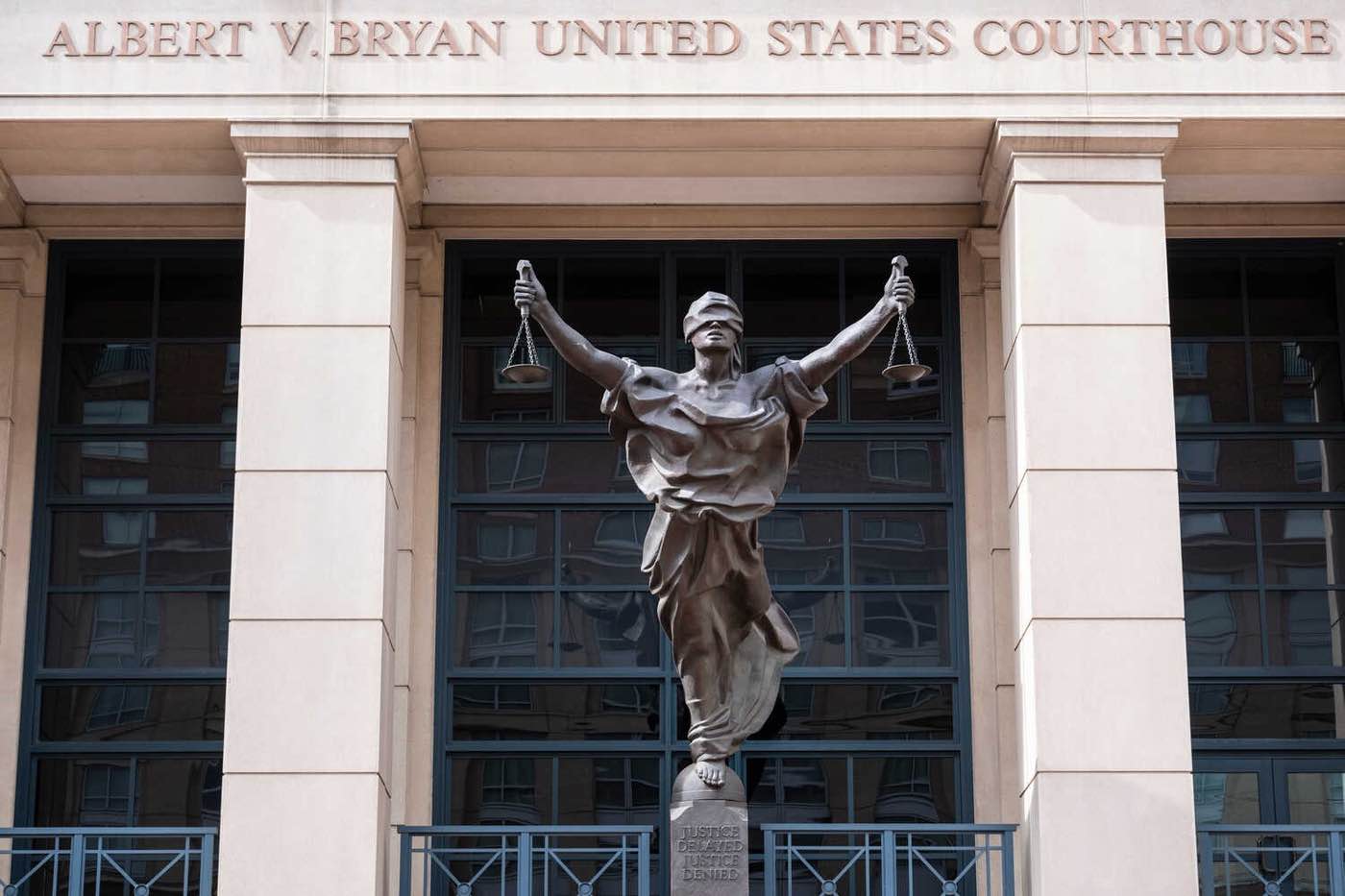
Justice delayed, justice denied.
Bitcoin had spiked when Trump took office, ahead of his promised deregulation of cryptocurrency. It peaked immediately before the White House panel spreading fear about “Antifa.” In November, however, it plunged, shedding almost a third of its value. At the same time, there were murmurings that the Artificial Intelligence investment bubble could burst, tanking the stock market. Some Republicans likely feared that Trump’s tariffs and general recklessness could contribute to an economic crisis. This may have diminished their eagerness to be counted among his most obsequious supporters.
On November 26, two National Guardsmen were shot in Washington, DC by a disaffected Afghani war veteran. Trump once again sought to capitalize on this event to intensify his campaign against immigrants, but his Reichstag fire strategy was already producing diminishing returns. It bears mentioning that the shooting would not have occurred if Trump had not deployed the National Guard to DC in the first place. “She swallowed the spider to catch the fly… I don’t know why she swallowed a fly.”
On November 29, ICE attempted to carry out a major operation in New York City, only to be completely thwarted by popular resistance. People surrounded the ICE agents, blocked them, and escorted them out of the city. Rather than subduing the population, Trump’s heavy-handed attempt to make federal agencies into a political weapon had inflamed people, drawing them out of despair and fear into passionate collective action.
The Fight Ahead
On December 15, Kash Patel’s FBI claimed to have arrested five alleged members of “an anti-capitalist, anti-government movement,” four of whom were accused of participating a bomb-making conspiracy. The Criminal Complaint bears the hallmarks of a classic entrapment case.
The end of 2025 finds us at another turning of the tide. If federal agencies have yet to move with full force against a target other than immigrants, it is only because people have fought so hard to obstruct ICE. This drives home the true meaning of solidarity: the best way to protect ourselves tomorrow is to protect each other today. Trump and his henchmen would already be carrying out extrajudicial killings in our communities if they could. They may yet.
Having put the pieces in place to target anti-fascists, it is almost inevitable that federal agencies will follow through. Any FBI agent who wants to advance his career now has an incentive to set up an entrapment case, and more ambitious assaults are probably on the way as well. If these succeed in reducing people to silence, if the frame-ups play well to television audiences and turn public opinion against popular resistance, this will embolden not only the Trump regime, but also Democratic politicians who would happily be rid of their pesky rivals. We should respond to the next round of repression in ways that bring people together to experiment with new tactics, the same way that people have formed rapid response networks in response to ICE raids.
This is not the first time—not even the first time this century—that federal agencies have declared anarchists to be their number one domestic target. The FBI did the same thing in May 2005. Within seven months, they had initiated “Operation Backfire,” one of the flagship cases of the Green Scare alongside the SHAC 7 prosecution. Looking back twenty years, we can see that refusing to let our movements fracture under pressure is as crucial to our safety as any particular security culture practice.
If Trump’s support continues to crumble, this may prevent him from targeting his adversaries in a systematic way, but it will not reduce the danger he poses. If his situation grows more precarious, there will be more Reichstag fires, more Charlottesvilles. Like Benjamin Netanyahu, he may instigate wars—or worse—as a means of evading his day of reckoning.
Nonetheless, the only way out is through. Today, it is clear for all to see that there is no route to a better future that does not begin with building the capacity to resist the violence of the state.
Update: Three weeks after this text was published, the United States attacked Venezuela and ICE agent Jonathan Ross murdered Renee Nicole Good in cold blood in the streets of Minneapolis, fulfilling the foregoing predictions.
The Elections
Chiefly concerned with job security, Democratic politicians have sought to focus attention on the 2026 elections, even as Congress itself has been largely sidelined by the executive and judicial branches of government. The 2026 elections could be to Trump’s second term what the Mueller investigation was to his first: a spectacle that distracts people from the urgent matter of building real power. Regardless of how people vote, the elections will only matter if the balance of power shifts against Trump both in the streets and inside the state.
In 2022, our comrades in Turkey reported a similar dynamic under Turkish president Recep Tayyip Erdoğan:
For the past ten years, there has always been an election on the horizon that people hope will deal a death blow to Erdoğan… there have been no less than six of these elections, ranging from a referendum to presidential, parliamentary, and mayoral elections. Some of them were repeated until the “correct” result was delivered.
Donald Trump has made it crystal clear that he will not leave power voluntarily. On October 23, Steve Bannon stated that there was a plan to arrange for him to serve a third term. Had there been no George Floyd uprising, Trump might well have succeeded in enlisting more elements of the state in his 2020 coup attempt. This time around, he has installed loyalists atop all of the agencies that refused to support him then. It is possible that he might conclude this term with his administration even more fractured than last time—but only if we exert considerable pressure.

Update your tactics before it’s too late.
If Trump will not leave power voluntarily, we have to evaluate our protest strategies accordingly. We must build the capacity to exert leverage in ways that militarized occupiers cannot easily counter. The Democrats who have argued that Trump’s National Guard deployments were not necessary on the grounds that the demonstrators were not being unruly enough to warrant them are thinking in a way that can only serve Trump. Remaining sedate and well behaved will simply open the way for fascism. The question is not how to keep crowds under control, but how to become impossible to control.
Even those who only wish to for electoral victories must understand the importance of grassroots unrest, as we saw in 2020:
In op-ed after op-ed, centrists expressed concern that the street confrontations of May and June 2020 might swing the election to Donald Trump. In fact, Democratic voter registration in June 2020 increased by 50%, while Republican voter registration grew by just 6% that month. Those who cited the protests as a factor in determining how they cast their ballots in 2020 voted for Joe Biden by a margin of fully 7%.
In other words, the George Floyd Revolt helped get Biden elected.
And remember—the George Floyd Revolt did not begin with a voter registration drive. It got off the ground with the burning of a police precinct. According to a Newsweek poll, 54% of those surveyed believed that this was justified. If that had not occurred, the movement would not have succeeded in pushing the murders of George Floyd, Breonna Taylor, and others into public discourse, and there would have been no electoral gain for the Democratic Party. There is no way to create powerful movements without taking real action against the causes of injustice.
Even if Trump is removed from power, whether by election or other means, authoritarianism is here to stay. Now that this is the ascendant model, we see politicians from across the political spectrum cozying up to the reigning despots—not just Eric Adams, but even Zohran Mamdani—or taking pages from their playbook, like Gavin Newsom. The Republican Party has been reinvented as the private vehicle of a single man; the Democrats who worked so hard to brand themselves as sanctimonious rule followers are hastening to emulate their rivals.
If or when Trump loses control, a power struggle will ensue, and the winner could be an autocrat like himself—from either political party. This is yet another reason why, if we want to see real social change, we have to build grassroots movements that are not dependent upon representational politics, that can act effectively regardless of who holds office.
We must make it clear to everyone that even the most well-meaning Democrats do not represent a real alternative, however they might update their campaign platforms. The Biden administration drove millions of people to vote for Trump because the Democrats failed to address the problems that capitalism is creating. If we manage to force Trump from power once more only to repeat this cycle yet again, the next wave of fascism will be more horrific than we can possibly imagine.
The movement against Trump must dig deeper and look further than electoral politics. We must center practices that put power in the hands of ordinary people, pursuing a strategy that outflanks and delegitimizes party politics along with capitalism and the violence that sustains it. We have to dismantle the mechanisms that produce billionaires in the first place. We have already caught glimpses of what that can look like.
The problem is much bigger than a single politician, party, or government. The same forces that brought Trump to power in the United States are bringing similar figures to power in Argentina, Chile, Europe. We are enduring the dying throes of a centuries-old social order that threatens to destroy us along with itself. We will only survive if we can solve the immediate problems we face in ways that enable us all to build a new way of life together. This is the secret promise of the rapid response networks.
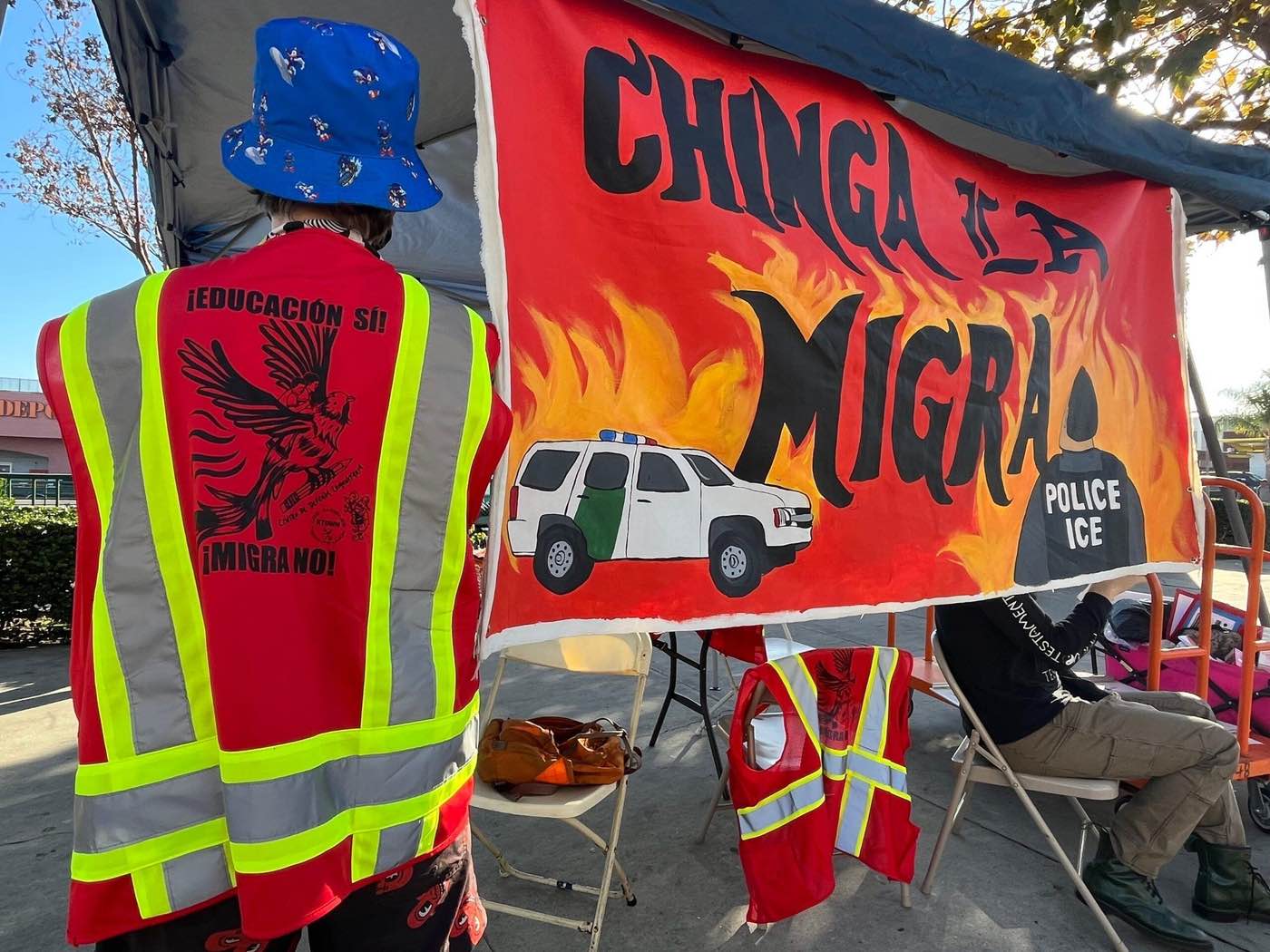
Volunteers staffing a community defense center set up at Home Depot.
How to Escape the Trump Era
How do you topple an autocrat?
First, identify segments of his support base that are not permanently committed to his reign,7 but whose backing is essential to keeping him in power. Analyze their interests. Identify what is more important to them than maintaining his reign. Think about their vulnerabilities. Then identify a form of activity that could put that segment of the autocrat’s supporters in a situation in which they will prefer to withdraw their support.
Engage in that activity—whatever it takes. Repeat as needed until enough sectors of society shift their commitments.
Something like this occurred in summer 2020, when Trump concentrated federal agents in Portland in an effort to show his supporters in the capitalist class that he could successfully impose order and preserve business as usual. Essentially, he was attempting to provide proof of concept to potential investors in a coup. Because he failed, most major capitalists did not support his 2021 coup attempt. The credit for this goes to the crowds who showed up every night, whose courageous efforts not only defeated the federal agents but convinced elements of the ruling class that Trump’s efforts to remain in power would only endanger them.
The anti-Tesla protests of spring 2025 demonstrated the effectiveness of this strategy. Facing a unified front of fascist demagogues, Christian nationalists, and tech billionaires, the protesters applied pressure to Tesla dealerships and achieved startling results within three months. Coincidentally or not, the fracturing of the alliance between Donald Trump and Elon Musk—one of the most powerful participants in Trump’s coalition—took place immediately before the June 2025 uprising in Los Angeles, distracting Trump at a crucial juncture.
If we do not wish to live under the autocratic rule of Donald Trump or his successors for the rest of our lives, we will have to use direct action to break up his support base, compelling those who have remained passive to take a stand against him.
And then, we will have get to the root of the problem.
Opportunities
With the old institutions in disarray and faith in politicians at an all-time low, this would actually be an auspicious time for a powerful liberation movement—if only such a movement existed. The chief problem is not the strength of our enemies, but our own weakness.
Countless people on the receiving end of Trump’s policies experience a daily emotional reality of rage restrained by terror, in which the fear of state violence mounts at a pace that only barely keeps up with their fears for the future. Should cracks appear in Trump’s control—for example, if a movement emerges that can consistently outmaneuver his forces—it could unleash a tremendous amount of pent-up energy. Whoever can bring people together on that basis will open a path that millions will rush to tread.
There will be no returning to Biden’s America. The destruction that Elon Musk and Donald Trump have wrought cannot be undone. But they have showed millions of people how urgently real change is needed. In the wreckage that they have created, it should be easy to make the case that our institutions of memory and care should never be at the mercy of a few narcissists. Everyone should be able to recognize that the legal system was only a few appointments away from tyranny all along, that the entire political system has always functioned to keep most people at a distance from their own agency.
If nothing else, the lines are drawn clearly now. The far right can no longer pretend to oppose the billionaires who finance them; the billionaires can no longer pretend to be creating prosperity for all; the Zionists who threw their lot in with the Heritage Foundation can no longer pretend to represent resistance to fascism. Who can still pretend that Silicon Valley deepens our social ties, that Artificial Intelligence makes us more creative, that cryptocurrency enriches us? Those who made excuses for ICE and the police in 2020 must now see them for what they are, a reserve army waiting to serve any despot—just as they must see that borders are not lines between communities but open wounds within them.
As we brace for the worst, we should also prepare proactively to bring about a best-case scenario. As terrifying as this situation is, if we survive, we will arrive in a different world. Right now, in the midst of battle, let’s identify what it will take to get there, popularize our proposals, and start to realize them together.
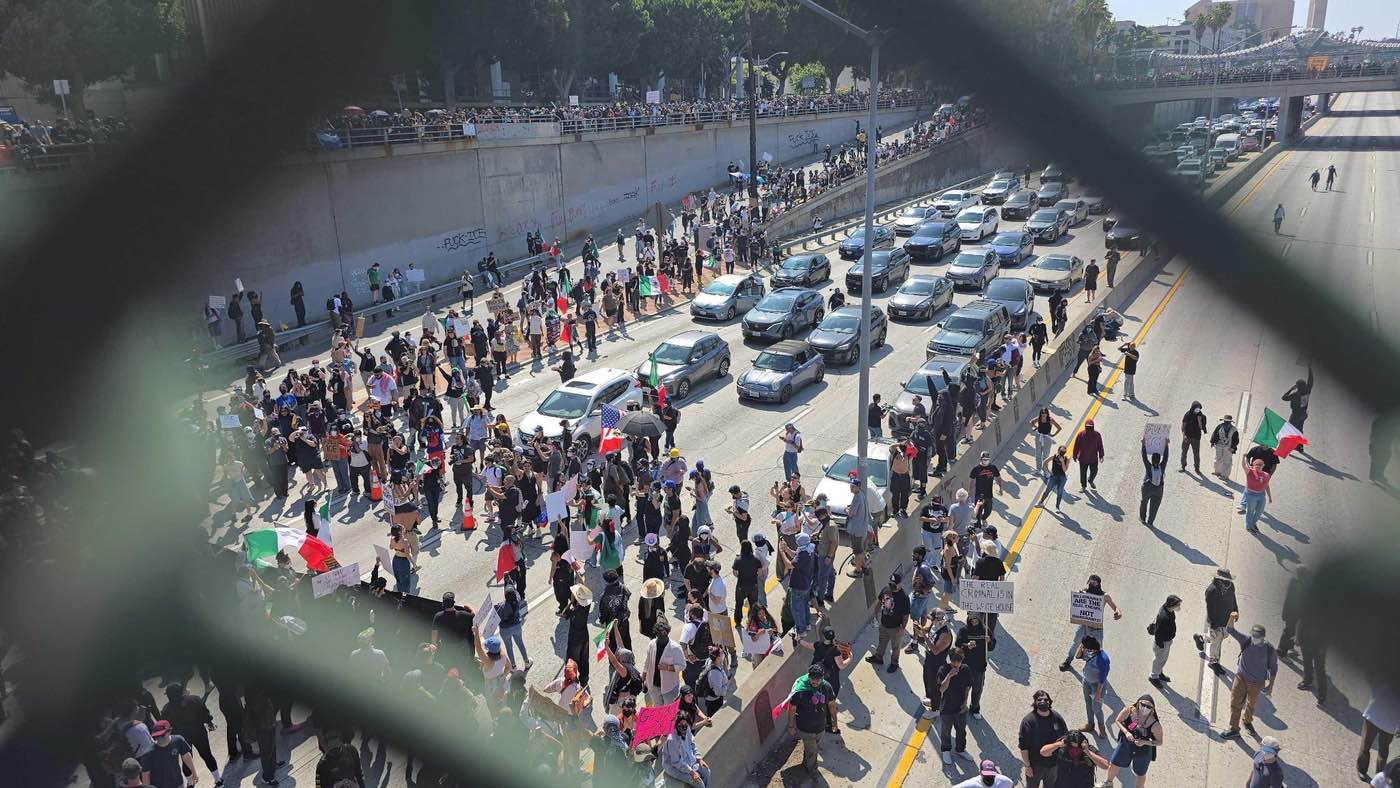
Demonstrators blocking a highway in Los Angeles.
It’s you against the billionaires. At their disposal, they have all the wealth and power of the most formidable empire in the history of the solar system. All you have going for you is your own ingenuity, the solidarity of your comrades, and the desperation of millions like you. The billionaires succeed by concentrating power in their own hands at everyone else’s expense. For you to succeed, you must demonstrate ways that everyone can become more powerful. Two principles confront each other in this contest: on one side, individual aggrandizement at the expense of all living things; on the other, the potential of the individual to increase the self-determination of all human beings, all living creatures.
-
“A profit-driven economy inevitably concentrates wealth into fewer and fewer hands. In a globalized world, any country that tries to reverse this process scares off investors; this is why today even the wealthiest nations are being forced to feed all the infrastructure of social democracy into the fire, keeping the market healthy at the expense of the general population. This problem could be solved by the revolutionary abolition of private property and the state that defends it, but there is only one way to preserve the support infrastructure of social democracy while maintaining capitalism, and that is to narrow down who gets to benefit from it.” –Syriza Can’t Save Greece: Why There’s No Electoral Exit from the Crisis ↩
-
“Just as capitalism succeeded feudalism in Europe, representative democracy proved more sustainable than monarchy because it offered mobility within the hierarchies of the state. The dollar and the ballot are both mechanisms for distributing power hierarchically in a way that takes pressure off the hierarchies themselves. In contrast to the political and economic stasis of the feudal era, capitalism and democracy ceaselessly reapportion power. Thanks to this dynamic flexibility, the potential rebel has better odds of improving his status within the prevailing order than of toppling it. Consequently, opposition tends to reenergize the political system from within rather than threatening it.” –From Democracy to Freedom ↩
-
While Henry Ford and Elon Musk share an affinity for fascism and white supremacy, Ford famously bought up all the stocks in his company in 1919 in order to take it private. By contrast, Musk made his billions largely as a consequence of stock market speculation, which has left Tesla stocks dramatically overvalued relative to the actual income that Tesla sales bring in. ↩
-
Those facing off against Donald Trump in the United States would do well to study resistance in China, Russia, Kazakhstan, and other authoritarian contexts. ↩
-
The refrain of the democrat: “Take everything from me, but leave me the idea that I choose this state of affairs of my own free will!” ↩
-
In August, one journalist had asked Where Have the Proud Boys Gone? Charlie Kirk’s organization, Turning Point, sought to use the opportunity to set up chapters around the country. It remains to be seen to what extent they will succeed in expanding the grassroots reach of the far right, which no longer has the advantage of purporting to oppose the establishment. ↩
-
Especially in the era of rage-driven social media, it can be tempting to focus on those who are most committed to supporting the autocrat, but that is a mistake. There is little to be gained by focusing on those who would sooner die than see their leader deposed. ↩